
“Power to the People”
What John Lennon Was Actually Warning Us About

When the pasture gets loud, the sheep don’t rush toward the noise.
They slow down and listen. They notice patterns instead of slogans. Old rhythms. Familiar mistakes. Songs written before politics learned how to disguise itself as entertainment and before power figured out how to smile while moving the fence.
This week, the flock went back to Power to the People.
Not as a nostalgia trip but as a text worth rereading.
This song isn’t celebratory in the way people often remember it. It isn’t comforting. It doesn’t promise a happy ending. It sounds more like a reminder slipped under the door, warning you that something important has already started to drift.
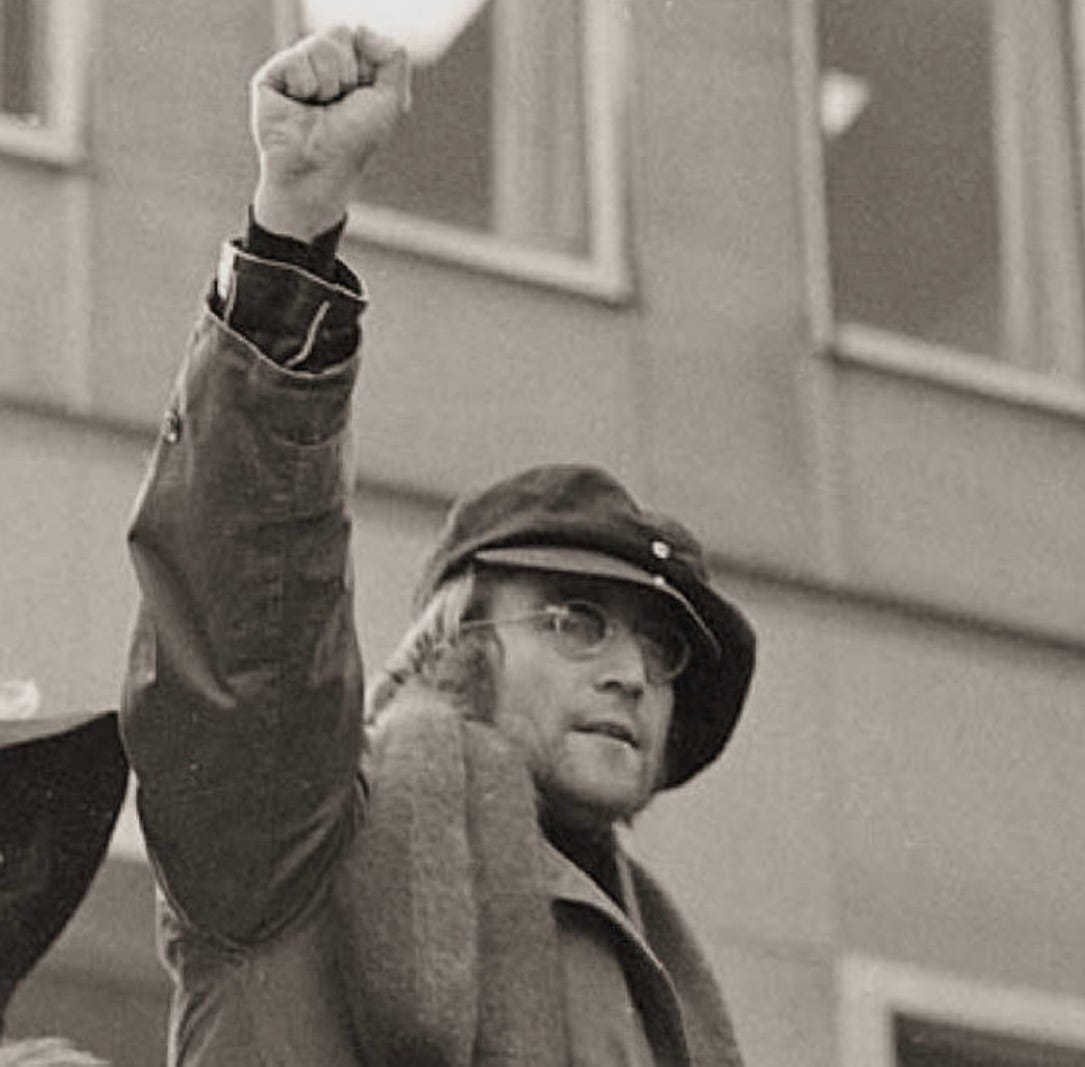
The Title Isn’t Decorative
“Power to the people” gets tossed around now like a greeting card sentiment. It shows up on posters, gets shouted at rallies, and is repackaged endlessly. But when John Lennon wrote it in 1971, it landed differently. It wasn’t vague or inspirational. It was confrontational.
The phrase doesn’t say leaders should be kinder. It doesn’t say institutions should behave better. It doesn’t say voting will fix everything. It says something more destabilizing than all of that: power doesn’t originate at the top. It starts with people, and anything else is temporary.
The sheep understand temporary arrangements. They understand borrowed authority and how often borrowed things quietly stop being returned.
Lennon repeats the line not because he’s padding the song, but because he knows how quickly people forget first principles once things feel normal again. Comfort has a way of dulling memory.
Authoritarianism doesn’t need violence right away. It needs forgetfulness.
