
The Government Is Buying Your Movements
Every place you go can be purchased. The sheep are asking how this is still legal.

The sheep have been watching a quiet admission that did not arrive with much ceremony, but carries enormous implications.
At a Senate Intelligence Committee hearing this week, FBI Director Kash Pupil confirmed under oath that the FBI is purchasing commercially available location data on Americans. The question before the committee had been simple: would the FBI commit to not buying Americans’ location data without a warrant? The answer was just as simple. No.
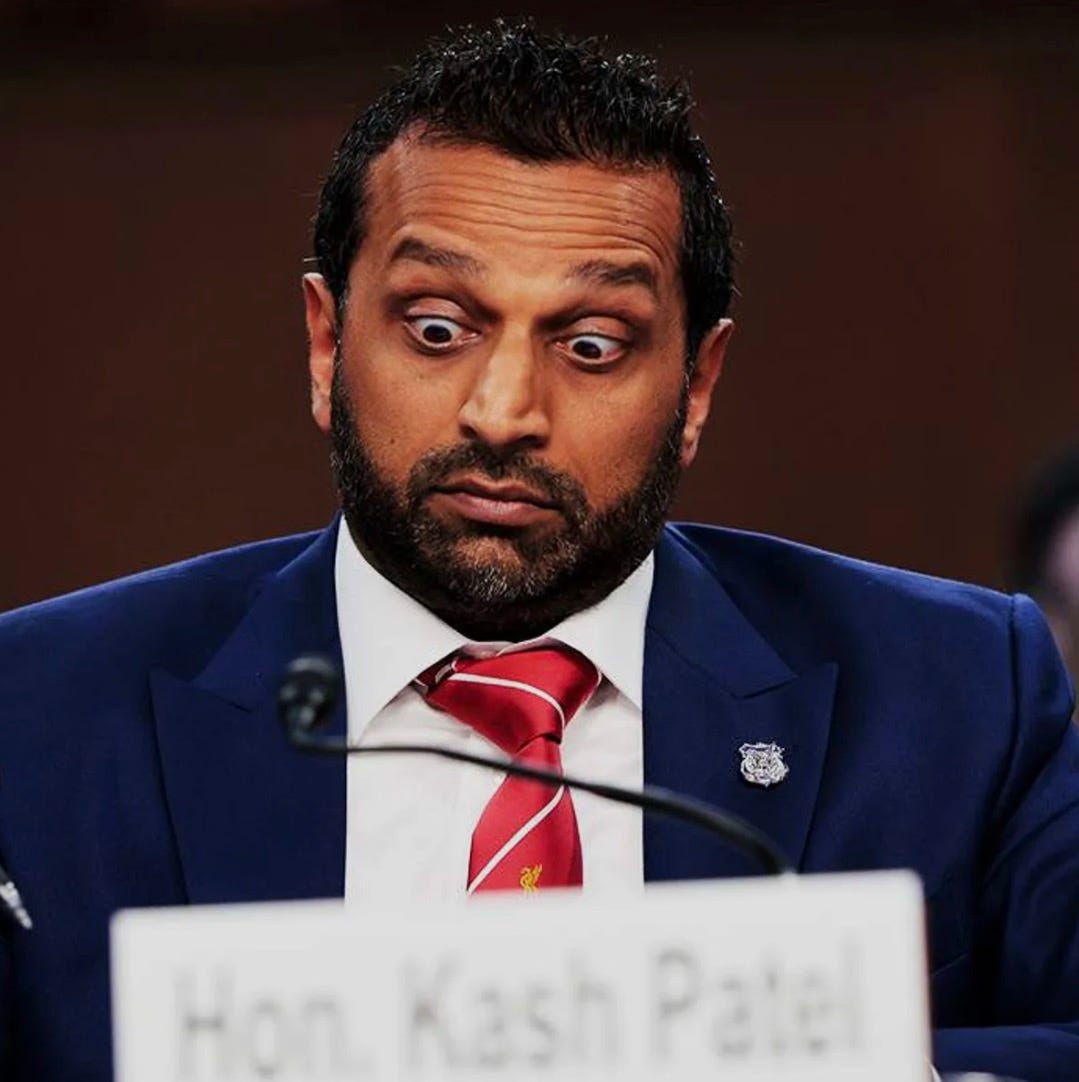
Patel explained that the bureau considers this practice lawful because the data is “commercially available.” In other words, if a private company collects it and sells it, the government believes it can buy it. The sheep have been thinking about what that means.
For most of American history, the rule felt clear. If the government wanted to know where you were, where you had been, or where you were going, it needed a warrant. The Fourth Amendment required it. Courts reinforced that idea in recent years, recognizing that cell phone location data is so revealing that it cannot be accessed without judicial approval.
But the sheep have noticed something about modern life. The same information exists elsewhere now. It lives inside apps, advertising networks, and data brokers, quietly collected and packaged as a product. The government no longer needs to compel that information. It can simply purchase it.
Lawmakers have warned that this creates an end run around the Constitution. The sheep understand that concern, because the effect is the same. The government gains access to detailed records of people’s movements. The only difference is how it gets them.
What unsettles the sheep is how ordinary this has become. Personal data is now a commodity. Companies track where people go, how long they stay, what they buy, and who they interact with. That information is bundled, anonymized in theory, and sold to buyers who want insight into human behavior. One of those buyers, it turns out, is the federal government.
This creates a strange gap between what the Constitution says and how the world actually works. The Constitution limits what the government can demand. It says much less about what the government can buy. The founders could not have imagined a world in which private companies would track citizens so thoroughly that the state could simply purchase a detailed map of their lives.
The sheep tend to look for patterns, and they do not see this as an isolated development. It sits alongside the expansion of surveillance technologies, the rise of artificial intelligence to analyze massive datasets, and a growing willingness by agencies to test the edges of existing law. Each step can be justified on its own. Together, they begin to form something more permanent.
They also find themselves thinking about consent. When people download apps, they often agree to terms that allow their data to be collected and shared. Those agreements are long, technical, and rarely read. Technically, the data is given voluntarily. In practice, most people have little understanding of where that information ends up.
The path is indirect but clear. A person uses an app. The app shares data with a broker. The broker sells it. The government buys it. At no point does the citizen knowingly agree to government surveillance, yet the result is the same.
The sheep have learned that changes like this come quietly, through technical decisions and legal interpretations that accumulate over time. No law has been passed requiring citizens to hand over their location data. No speech has declared a new surveillance system. Instead, the government has found a way to access that information through the marketplace.
The sheep do not deny that law enforcement faces real challenges. Agencies investigate crimes, prevent attacks, and operate in a world where technology moves quickly. But they also know that power, once expanded, is rarely given back. If the government can purchase location data today, it may seek more tomorrow. If it can map movement, it may begin to predict behavior.
Each step can be explained. The pattern is harder to ignore.
Which brings the sheep to a question they cannot quite shake. What does it mean for a democracy when the government can track its citizens without asking a judge for permission?
The Constitution was designed to place limits on government power, and those limits depend not only on the words written down but on how they are interpreted and respected. If that spirit changes, the protections may remain on paper while their meaning slowly erodes.
The sheep are not certain where the line is, but they suspect it runs somewhere through this moment. When the government no longer needs a warrant to know where you are, the balance between citizen and state begins to shift.
And once that balance shifts, it is rarely easy to move it back.
I feel like this is a lot scarier than most of us realize.
No privacy left in the world