
They're Lying About the War
The sheep are watching troop deployments, escalating conflict, and a story that no longer matches reality.

The sheep have been watching the situation with Iran, and they are noticing something that feels increasingly difficult to reconcile.
Iran has now rejected the Trump administration’s ceasefire proposal outright. There was no indication of hesitation or ongoing discussion. Iranian officials made clear that they do not trust the United States and view the proposal as another tactical move rather than a serious effort to end the conflict. In place of a ceasefire, they are demanding compensation for the damage caused by the war, guarantees that future attacks will not occur, and a meaningful reduction in U.S. and Israeli military presence in the region.
That is not the language of de-escalation. It is the language of a government preparing to continue the conflict while raising its terms.
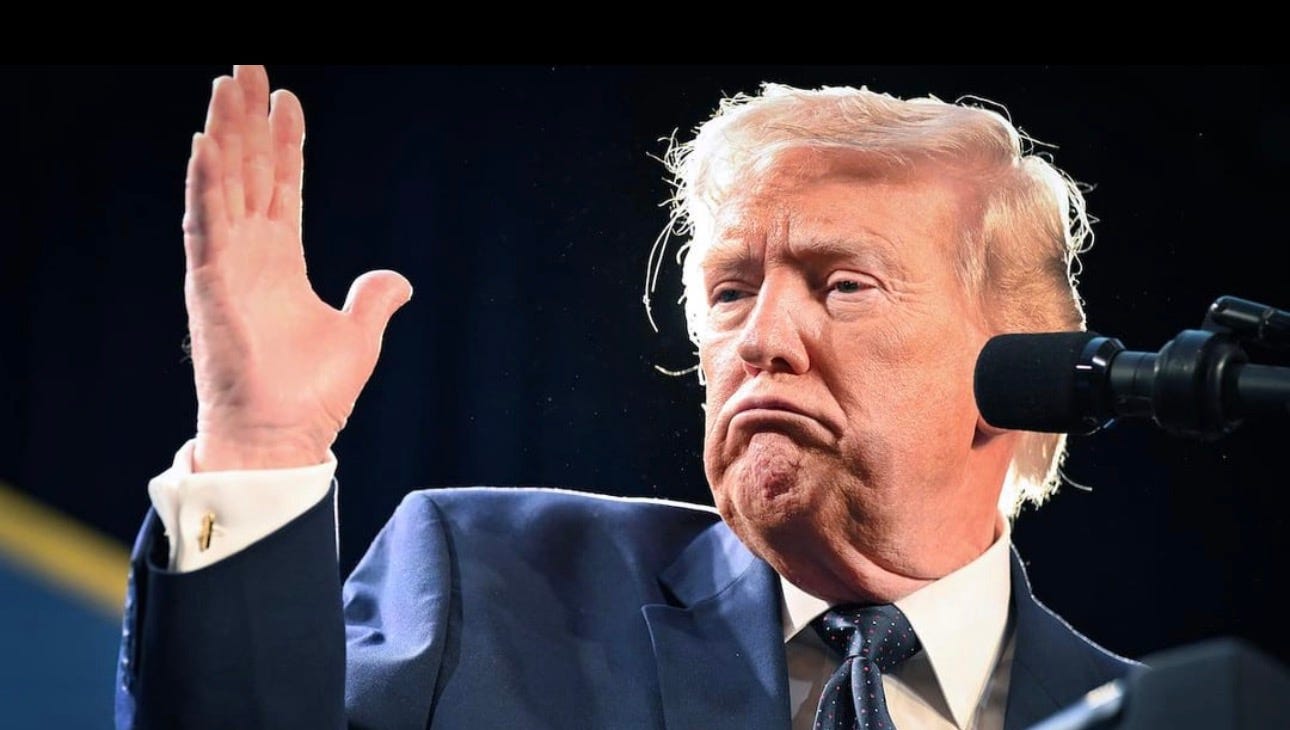
The sheep then looked to the response from the United States and found very little clarity. The president’s public presence has largely receded. There have been limited press appearances and fewer direct explanations, replaced instead by closed-door meetings and extended periods without public engagement, even as the situation grows more volatile.
At the same time, the military posture is becoming more serious. Thousands of U.S. troops are being deployed to the Middle East and are expected to arrive soon. Those movements are not symbolic. They create the conditions for a potential expansion of the conflict, including the possibility of ground operations. Yet public messaging from the administration and its allies continues to suggest that the United States is not fully engaged in a war.
The sheep find that contradiction difficult to ignore.
They have also been watching developments beyond troop deployments. Iran continues to control the Strait of Hormuz, one of the most important shipping routes in the world, and appears to be using that position to exert economic pressure. Energy markets are tightening, supplies of liquefied natural gas are constrained, and disruptions are spreading through industries tied to agriculture and manufacturing. These pressures do not remain distant. They move through global supply chains and eventually reach households in the form of higher prices and greater uncertainty.
At the same time, questions are emerging about how information is being handled at the highest levels of government. Reporting indicates that the president may not be receiving comprehensive intelligence briefings, but instead is being shown short, curated clips that emphasize successful strikes and favorable outcomes. Those clips do not appear to include the broader realities of the conflict, including risks, losses, and setbacks.
The sheep paused at that detail.
Decisions about war require a full understanding of consequences. The idea that those decisions could be informed by partial or selectively presented information raises concerns that are difficult to dismiss.
Meanwhile, the conflict itself is expanding.
In Iraq, a U.S. strike reportedly hit a site that included a medical facility, resulting in casualties among Iraqi personnel. The Iraqi government has called the strike a violation of its sovereignty and has authorized affiliated groups to respond. Retaliatory attacks have already been reported, including drone strikes that damaged U.S. military assets.
The sheep recognize the pattern. One incident leads to retaliation, and retaliation leads to escalation. Conflicts that begin in one place rarely remain contained.
In Israel, Iranian missile strikes have targeted areas near critical infrastructure. Israeli officials are now discussing timelines for regime change in Iran that could extend over many months. That framing suggests a prolonged campaign rather than a short-term operation.
At the same time, the regional political landscape is shifting. Turkey is urging neighboring countries not to align with the United States and Israel, and there is growing evidence that support for U.S. actions is less unified than in previous conflicts.
The sheep have also noticed that the instability is not confined to the Middle East.
In Latin America, new reporting is raising questions about U.S. strikes that were initially described as targeting criminal networks. In Ecuador, evidence suggests that some of the targets may have included civilian infrastructure. Local accounts and investigative reporting are beginning to diverge from the official narrative, creating uncertainty about what actually occurred.
The name of the operation itself has drawn attention. It has been described as “Operation Total Extermination,” a phrase that reflects an approach focused on overwhelming force rather than restraint. Concerns about sovereignty have already been raised by neighboring countries, and tensions in the region are increasing.
At the same time, developments in Venezuela suggest that efforts to influence democratic outcomes there have not succeeded. A figure associated with past human rights abuses has been elevated to lead the country’s military, underscoring how limited U.S. influence appears to be in shaping events.
Back in the United States, the political response has remained largely consistent. Some leaders continue to argue that the country is not at war, even as troop deployments and military operations expand. Others suggest that further escalation would be justified if deemed necessary. There has been little sustained debate and limited evidence of accountability.
The sheep keep returning to a simple observation.
There is a growing distance between what is being described and what is unfolding.
On one side, there are statements of progress, control, and limited engagement. On the other, there are troop movements, expanding conflict zones, economic disruption, and shifting alliances.
Each development can be explained individually. Together, they tell a more complicated story.
The sheep are not claiming to have all the answers, but they know what it looks like when events become harder to explain.
And they are paying very close attention.
One needs only to look at Gaza to understand Israel’s intentions. Netanyahu played Trump