
What the Sheep Remember About War Crimes
Military officers are now worrying about something no democracy should treat lightly: whether they may be asked to choose between obedience and legality.

The sheep have been thinking about a phrase that sounds abstract until somebody tries to make it practical.
A war crime is not simply an especially ugly act committed during war. War is ugly by nature. A war crime is a violation of the laws and customs that nations have developed, painfully and imperfectly, to place some limits on organized violence. The modern legal idea grew out of the recognition that even in war there must be rules about who may be targeted, how prisoners must be treated, and what kinds of destruction are unlawful.
The Hague Conventions of 1899 and 1907, and later the Geneva Conventions of 1949, helped establish those rules. After World War II, the Nuremberg and Tokyo trials gave the concept real force by prosecuting individuals, including state officials and military leaders, for atrocities committed under color of war. In other words, the world tried to build a principle that was both simple and radical: war does not place human beings outside morality or outside law.
That history matters because many people still imagine war crimes as something reserved for the defeated monsters of other countries, in other eras, under other flags. But the legal principle was always broader than that. The point was not merely to punish obvious evil after the fact. It was to establish that neither patriotism, nor rank, nor orders from above can automatically excuse conduct that deliberately targets civilians, mistreats prisoners, or uses force in ways prohibited by international law.
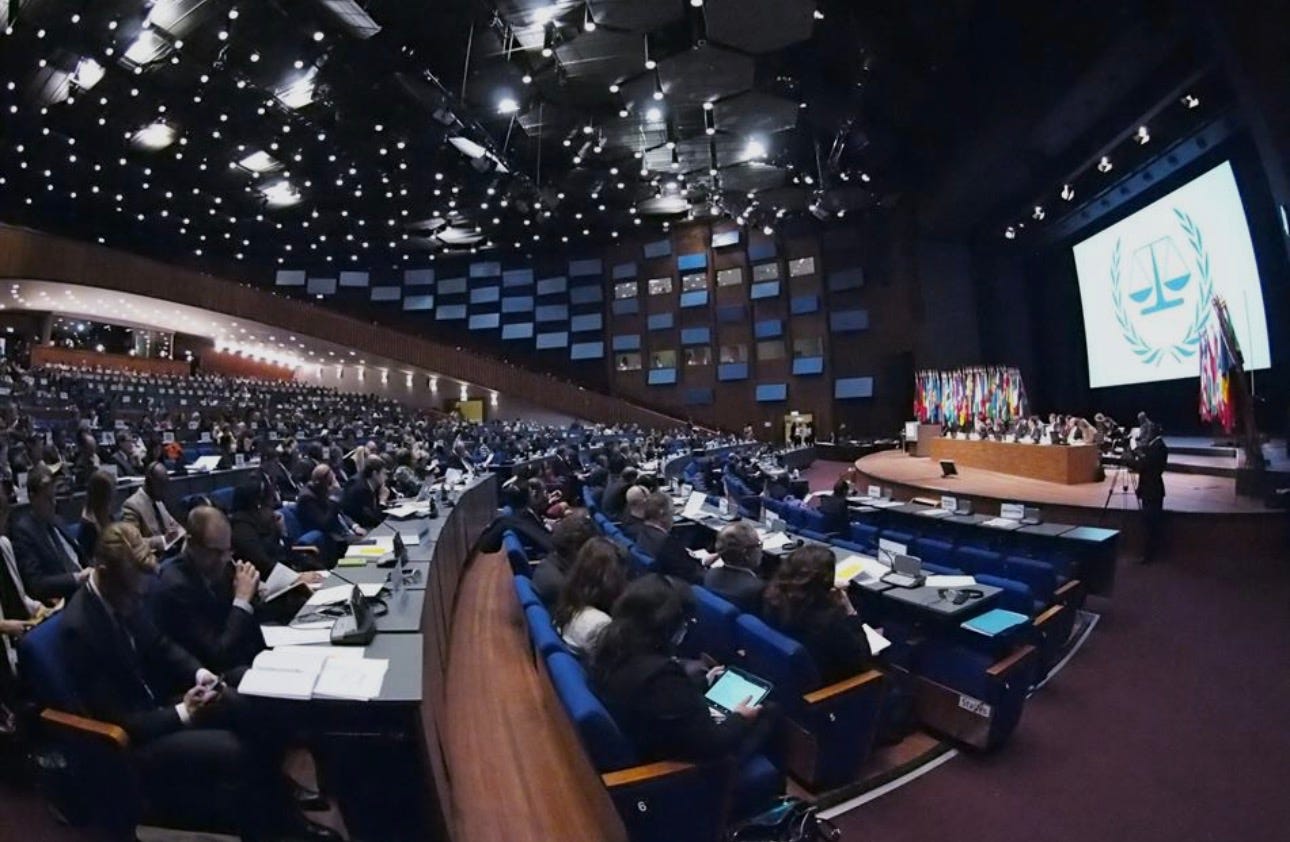
War crimes can include intentional attacks on civilians, torture, murder of prisoners, hostage taking, and other grave breaches of the laws of war. The International Criminal Court was later created by the Rome Statute, adopted in 1998 and entering into force in 2002, as a permanent tribunal to prosecute genocide, crimes against humanity, war crimes, and aggression when national systems fail to do so. The ICC itself describes its role as trying individuals charged with the gravest crimes of concern to the international community.
The sheep would underline one especially important part of that story: the law of war does not merely restrain politicians in the abstract. It places obligations on military officers and soldiers in the chain of command. Since Nuremberg, the idea that “I was just following orders” is not a complete legal defense has been one of the core moral lessons of modern military law. That principle is hard on purpose. It recognizes that disciplined armed forces depend on obedience, but it also insists that obedience has a boundary. When an order is manifestly unlawful, especially an order to attack civilians or civilian infrastructure without lawful military justification, military personnel may have not only the right but the duty to refuse it.
That is why this moment feels so alarming. Current and former military lawyers, commanders, and officers are increasingly concerned about the possibility that Donald Trump could issue unlawful military orders in the expanding conflict with Iran, especially after threatening to bomb civilian infrastructure such as power plants and bridges if Tehran did not comply with U.S. demands.
Legal experts warned that such orders would be “plainly illegal,” and some officers are now confronting the grim possibility that they may one day have to choose between disobeying a president and participating in conduct that could amount to war crimes. There is also concern that institutional guardrails have weakened because experienced legal and policy officials who might once have slowed or challenged unlawful orders have been removed.
The sheep think it is important not to blur categories here. Not every hard military act is a war crime. Civilian infrastructure can sometimes become a lawful military target depending on how it is used, the necessity of the strike, and the principle of proportionality. But when a political leader talks casually and publicly about bombing civilian systems in order to break a population’s will, punish a nation, or force political submission, alarm bells ring for a reason.
Trump threatened strikes on Iran’s civilian infrastructure, while critics including lawmakers and legal experts argued that such threats point toward violations of international law. The issue is not only what may happen next. It is that the language itself is already pressing against the boundary between lawful warfare and criminality.
History suggests why this is important.
The laws of war were built because modern states became so powerful that without rules, civilian life could be ground into dust by people claiming strategic necessity. The Hague rules tried to civilize warfare before the mechanized slaughter of the twentieth century became complete. Nuremberg made clear that leaders who turn cruelty into policy can be judged after the guns go silent. The Geneva system tried to make civilian protection and humane treatment more concrete after the world saw where total war could lead. None of this was naïve. It was not based on the fantasy that war could be made clean. It was based on the fear that without enforceable boundaries, governments would always find reasons to call atrocity necessary.
Military officers are not grandstanding politicians or cable news hawks. They are the institutional memory of a republic that has long tried to teach its armed forces that law is part of military discipline, not an obstacle to it. Their concern signals that this is not merely another fight over rhetoric. It is a test of whether the American chain of command still treats legality as binding when the commander in chief grows reckless.
The sheep would put it this way: war crimes law exists because human beings discovered, again and again, that power under pressure tends to call its own excesses necessity. The point of the law is to say no, not afterward when the cemeteries are full, but before the order is carried out.
Today, as Trump speaks in ways that legal experts and military professionals hear as invitations to unlawful violence, the old rules suddenly seem less academic. They are becoming immediate, personal, and terribly human. Somewhere in the chain of command may be officers now asking themselves one of the hardest questions democratic government can produce: when the civilian leader above you treats the law as a nuisance, who is left to keep war from becoming a crime in the name of the state?