


Rage Against the Machine’s “Killing in the Name” is one of the bluntest political songs ever recorded. The song argues that in America, official power and racial terror have often been closer to one another than the country likes to admit. It also argues that systems of domination do not survive through violence alone. They survive because people are trained to obey them, repeat their logic, and treat them as natural. The song was released in 1992, the same year as the Los Angeles uprising after the beating of Rodney King, and it has long been understood as an indictment of police brutality and racist state power.
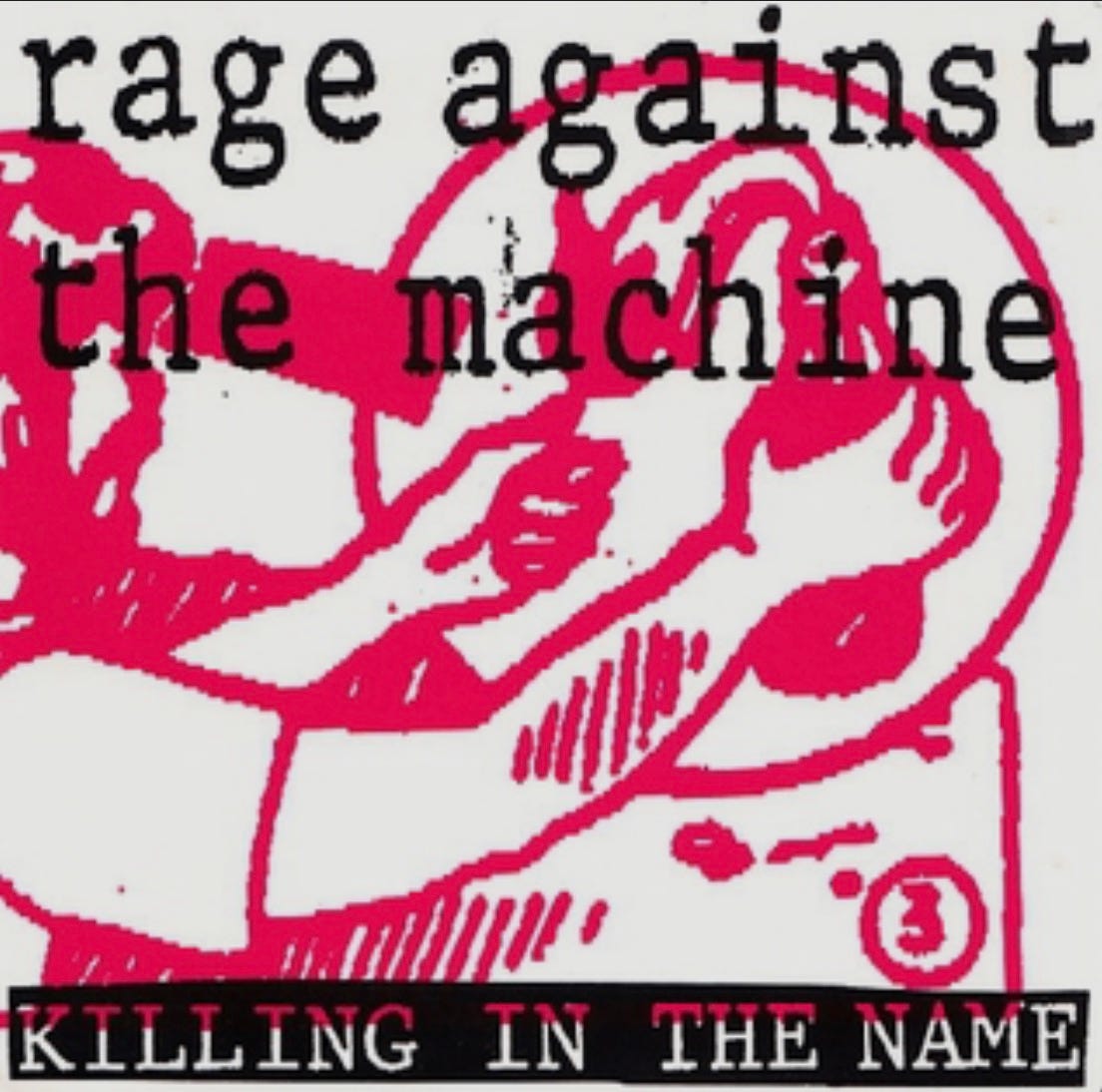
The first key lyric is the pairing of “work forces” with “burn crosses.” Those four words and three words contain the song’s central accusation. The phrase “work forces” points toward official authority, especially police power. “Burn crosses” points toward white supremacist terror. Put together, the line suggests that state authority and racist violence are not always opposites. Sometimes they overlap. Sometimes the same system that claims to preserve order also preserves hierarchy. The song is not making a narrow personnel claim that every officer belongs to a hate group. It is making a structural claim that institutions can carry forward the logic of racial domination while still speaking the language of law, order, and security. The official lyrics on Rage’s website make that accusation unmistakable.
The next important phrase is “chosen whites.” That lyric strips away any ambiguity about the song’s subject. It suggests that violence is being justified not by justice, but by membership in a racial order that protects some people and devalues others. In the song’s framework, the issue is not only brutality. It is selective legitimacy. Who gets presumed innocent, who gets treated as dangerous, and who gets the benefit of official protection are not neutral questions. They are political questions, and in the song they are racial ones. That is what gives the track its enduring bite. It is not protesting authority in the abstract. It is naming the way race can hide inside supposedly neutral institutions.
Then the song turns from power to conditioning. The repeated refrain about doing “what you tell me” is the song’s theory of obedience in miniature. It shows how domination becomes normal. First there is the command. Then there is repetition. Then there is submission. The repetition is not filler. It is the point. It mimics indoctrination, the way systems train people to comply until obedience feels automatic. By the time the song reaches its final eruption of refusal, it has moved from diagnosis to rebellion. The song is dramatizing the moment when a person recognizes that authority has been asking not for civic responsibility, but for surrender.
That is why “Killing in the Name” still feels so current in American politics. Its target is not merely abusive power. Its target is power that wraps itself in legitimacy while demanding loyalty. That theme runs straight through the present moment. Trump’s administration has been pressing an aggressive immigration agenda, including an attempt to restrict birthright citizenship by executive order. The Supreme Court heard arguments on April 1, 2026, and justices across ideological lines appeared skeptical. Trump then lashed out at the justices, suggesting they were foolish for trying to show independence instead of rewarding him. That matters because it reflects the same mentality the song warns about: authority insisting that institutional actors should obey the leader rather than the law.
The song also resonates because it is suspicious of official force becoming routine. ICE agents were deployed to airports during the DHS funding crisis and that the administration said they would remain as long as needed. That is exactly the kind of development the song helps decode. Power becomes most dangerous when it stops looking exceptional and starts looking administrative. It becomes a process, a staffing solution, a security measure, a bureaucratic adjustment. “Killing in the Name” is a warning against that normalization. It asks listeners to notice when coercion is being repackaged as procedure and when racialized enforcement is being presented as common sense.
So the meaning of the song has not aged out. It remains a furious argument that official force can preserve old hierarchies under new names, that obedience is often the mechanism by which injustice sustains itself, and that refusal becomes necessary when institutions ask for loyalty at the expense of conscience. “Killing in the Name” lasts because it is not just anti-authority. It is anti-submission. It insists that the real danger begins when people stop asking what power is serving and start assuming that power deserves compliance simply because it is wearing the right uniform.


