


When The Black Eyed Peas released “Where Is the Love?” in 2003, the song was reacting to a country shaped by fear, war, media saturation, and division after 9/11. What made it last is that it did not stay trapped in that moment. The questions it asked were bigger than one administration or one war. They were about what happens when a society becomes so angry, distracted, and tribal that it starts losing its moral center.
The sheep have been listening to it again because, two decades later, it sounds less like a time capsule and more like a diagnosis.
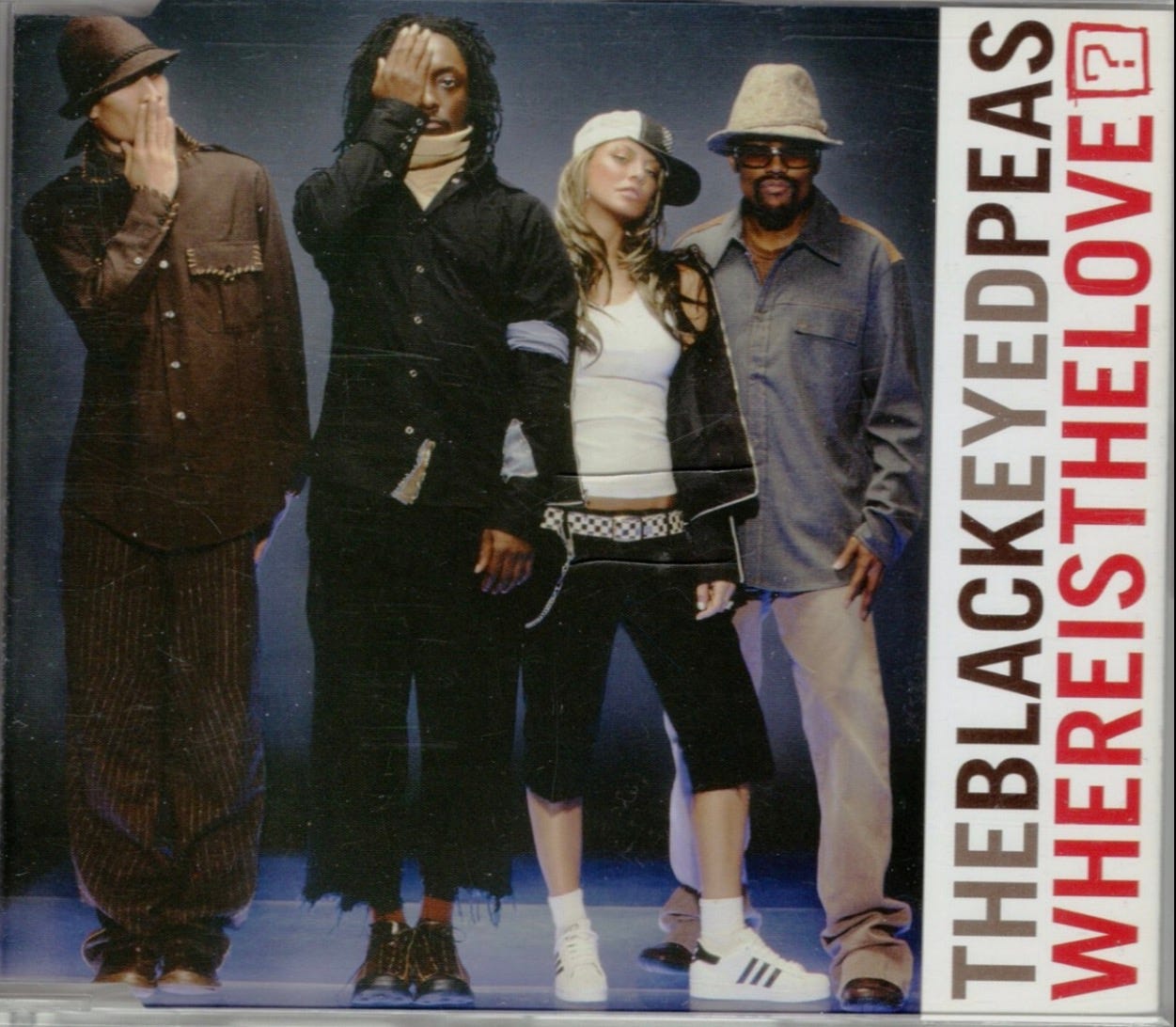
The song begins with a blunt question: “What’s wrong with the world, mama?” That line strips away ideology and goes straight to bewilderment. It sounds like a child trying to understand adult cruelty. The sheep think that is part of why the song still lands. Much of American politics now feels like something that would be very difficult to explain honestly to a child. Leaders talk about freedom while normalizing violence. Citizens talk about patriotism while treating fellow Americans like enemies. Institutions insist they are preserving order while public trust collapses.
Then the song identifies one of the central problems: people have become so consumed by conflict that they no longer recognize one another’s humanity. The lyric “People killin’, people dyin’” is simple, almost painfully so. There is no abstraction in it. No euphemism. The sheep hear that line and think about how numb Americans have become to death, whether from war, mass shootings, state violence, or political hatred. One of the deepest dangers in the current political landscape is not only the presence of violence, but the speed with which people sort it into categories. Whose death matters. Whose death can be justified, and whose death can be ignored.
The song keeps returning to division, and it does so in a way that feels painfully current. It points to a society in which people are trained to look outward for someone to blame while the deeper system remains untouched. That dynamic is central to modern American politics. Everything becomes a culture war. Immigrants, teachers, journalists, queer people, racial minorities, cities, rural voters, elites, the poor. Everyone is turned into a symbol or label. The sheep notice that when people are encouraged to see each other primarily as threats, power itself escapes scrutiny. The fight moves horizontally while real authority remains safely above it.
One of the most important lines in the song is “If you only have love for your own race.” The line is not subtle, and it should not be. The song is naming what many people prefer to soften. The sheep think this line speaks directly to the current American moment because so much of today’s politics is still organized around fear of demographic, cultural, and social change. The language may be newer now. It may come wrapped in phrases like “replacement,” “real Americans,” “protecting our way of life,” or “restoring order.” But the underlying emotional machinery is old. It is still the belief that equality for others somehow means erasure for you.
The song also understands that hatred does not stay contained. It spreads and trains people to see through distortion. The line “Then you only leave space to discriminate” captures that progression. Once politics becomes organized around resentment, it needs constant targets. The sheep see that clearly in the American present. The people marked as dangerous or disposable may change from week to week, but the mechanism stays the same. Outrage gets directed downward and outward, never upward toward the systems that actually produce precarity and fear.
Another part of the song that feels especially relevant today is its critique of media. It describes a world in which information does not calm people down or make them wiser. It intensifies panic and sharpens hatred. In 2003, that meant cable news and war coverage. In 2026, it means algorithmic rage, viral deception, and political identities hardened by constant repetition. The sheep think the song anticipated something important: when people consume fear all day, they start to experience fear as truth. They become easier to manipulate. The loudest voice begins to feel like the most trustworthy one simply because it drowns everything else out.
The song’s chorus, asking “Where is the love?”, can sound naïve if heard carelessly. The sheep do not hear it that way. They hear it as a political question, not just a sentimental one. Love, in this song, is not romance or softness. It is social recognition. It is the ability to imagine that another person’s suffering matters even if that person is not in your tribe. It is restraint, moral imagination, and the refusal to let cruelty become normal. In that sense, the question is devastating. Because the song is really asking: what happens to a democracy when empathy becomes optional?
That is the question the sheep keep circling now. The United States still has elections. It still has courts, a press, parties, and public rituals of democracy. But democratic life depends on more than procedures. It depends on some baseline willingness to live with one another as fellow citizens. When politics becomes organized around humiliation, domination, and revenge, democracy starts to hollow out from within. The forms remain and the spirit weakens.
There is another reason the song feels current. It does not place all blame on leaders. It also turns toward ordinary people and asks what they are participating in. The current political landscape in America did not emerge by accident, and it is not sustained by presidents alone. It is sustained by millions of small choices. What people repost, what they excuse, what they laugh at, what they ignore, what they stop feeling.
The sheep think that is why the song still hurts a little when you hear it. It does not let anyone fully off the hook.
In the end, “Where Is the Love?” is a protest song about moral disintegration. It is about a society becoming coarser, meaner, more divided, and more numb while still insisting it is righteous. That is why it fits the present so well. America today is full of declarations about strength, security, and greatness. The song cuts underneath all of that and asks a more destabilizing question.
What if the deeper crisis is not political strategy, but spiritual decay?
The sheep do not use that phrase lightly. They simply mean that a country can lose its sense of proportion, its compassion, and its ability to recognize the humanity of others long before it fully understands what it has lost.
That is the warning in the song.
It remains, uncomfortably, unresolved.


