


In 1963, a young songwriter named Bob Dylan released a song that sounded deceptively simple. It had only a few verses. The melody borrowed from an old spiritual. The questions it asked were short and plain. Yet the song quickly became one of the defining anthems of the civil rights era.
That song was Blowin’ in the Wind.
The sheep have been listening to it again lately.
More than sixty years later, the questions Dylan posed feel uncannily relevant to the moment Americans find themselves living through.
The power of the song is that it does not tell listeners what to think. It asks questions. Each verse poses moral puzzles about power, war, justice, and indifference. The answer, Dylan famously suggests, is already present. People simply refuse to see it.
The sheep recognize that feeling.
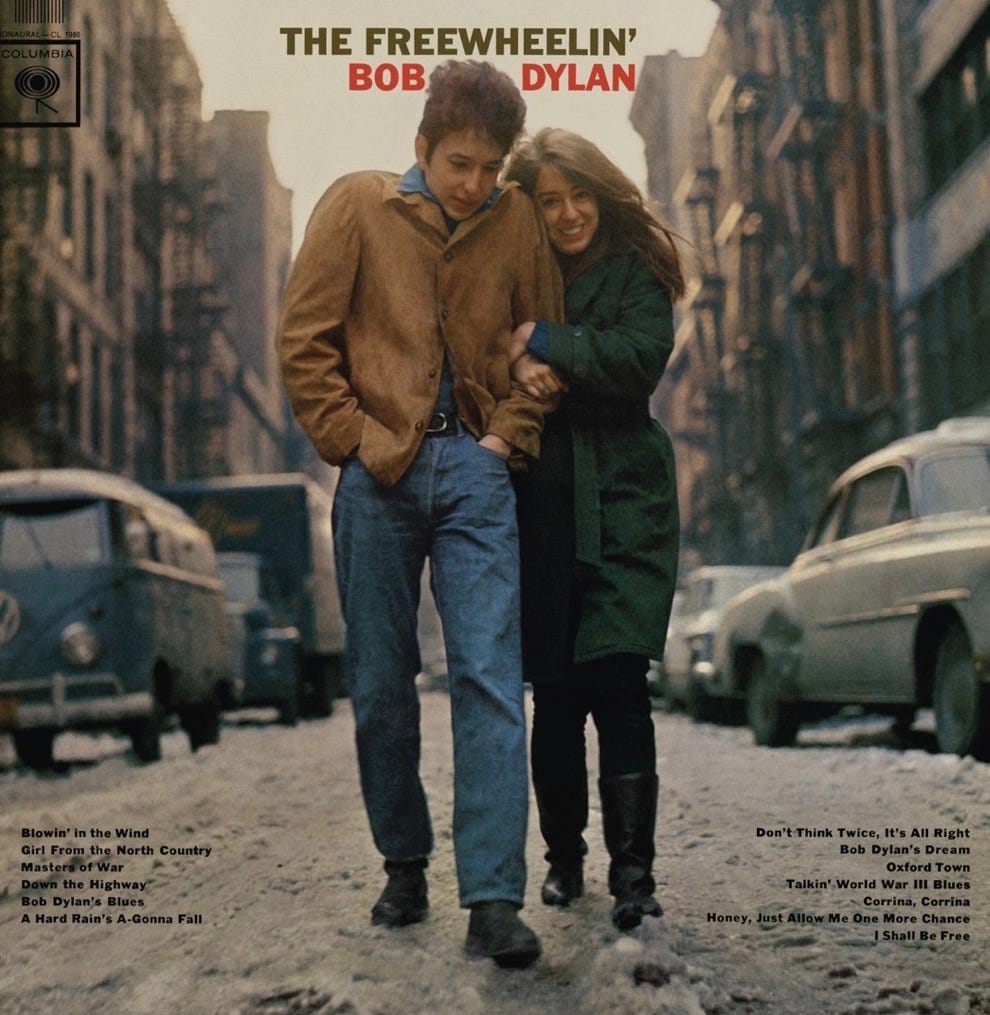
“How many roads must a man walk down before you call him a man?”
Dylan opens with a question about dignity.
“How many roads must a man walk down
Before you call him a man?”
When the song first appeared, the line spoke directly to the struggle for civil rights in the United States. Black Americans were demanding recognition as equal citizens under the law. The answer to Dylan’s question was obvious. They should never have had to prove their humanity in the first place.
The sheep see similar debates unfolding today.
Across the country, political arguments continue about who counts as fully American. Immigrants are described as threats rather than neighbors. Minority communities are treated as suspects rather than citizens. Entire groups of people find their rights debated as though dignity were a privilege granted by the powerful rather than an inherent human condition.
The question Dylan asked in 1963 still hangs in the air.
How many times must people prove they belong before the country acknowledges it?
“How many seas must a white dove sail before she sleeps in the sand?”
Dylan then turns to peace.
“How many seas must a white dove sail
Before she sleeps in the sand?”
The white dove is an ancient symbol of peace. Yet Dylan suggests that peace always seems just out of reach. The dove keeps flying, never landing.
The sheep cannot help but notice how often leaders speak of peace while preparing for war.
Recent events have only sharpened this contradiction. Political leaders invoke security, freedom, and national destiny as reasons to send bombs across oceans. Each conflict is presented as the one that will finally restore stability.
Yet the dove keeps flying.
Americans have now lived through decades of military conflicts that were introduced with promises of quick resolution and noble purpose. Instead, they often expanded into long struggles whose costs were measured in lives, money, and fractured international relationships.
The sheep hear Dylan’s question and wonder whether the dove will ever be allowed to land.
“How many times must the cannonballs fly before they’re forever banned?”
The next line is more direct.
“How many times must the cannonballs fly
Before they’re forever banned?”
The lyric reflects the deep anxiety of the early 1960s, when the Cold War and the threat of nuclear annihilation hung over everyday life. But the metaphor applies to any era in which violence becomes normalized.
The sheep notice how quickly violence has returned to American political language.
Political leaders speak casually about force, dominance, and retaliation. Protesters are described as enemies. Opponents are framed not as fellow citizens with different ideas but as threats that must be crushed.
History suggests that this rhetoric rarely ends peacefully.
Dylan’s question remains unanswered.
How many wars must people witness before they decide there must be another way?
“The answer, my friend, is blowin’ in the wind”
After each set of questions, Dylan repeats the refrain that made the song famous.
“The answer, my friend, is blowin’ in the wind
The answer is blowin’ in the wind.”
It is one of the most enigmatic lines in American music.
Some listeners interpret it as an expression of frustration, suggesting that the answer is elusive or impossible to grasp. Others hear it as a statement of quiet optimism. The answer is already present in the air around us. People simply refuse to acknowledge it.
The sheep lean toward the second interpretation.
Most of the political crises that divide the country today do not exist because solutions are unknowable. The solutions are often clear. The difficulty lies in persuading people to act on them.
Ending injustice requires confronting power. Ending war requires resisting fear. Protecting democracy requires defending institutions even when doing so is inconvenient.
Those choices are rarely easy.
Still, the answers exist.
They are blowing in the wind.
“How many years can a mountain exist before it is washed to the sea?”
In the second verse, Dylan turns to the passage of time.
“How many years can a mountain exist
Before it is washed to the sea?”
Mountains appear permanent, yet even they erode. The lyric reminds listeners that systems that seem immovable can eventually change.
The sheep find this thought encouraging.
American democracy has always contained tensions between its ideals and its reality. The nation has struggled with slavery, segregation, political corruption, and violent conflict. Each generation has confronted challenges that once seemed impossible to overcome.
And yet change happened.
The abolition of slavery, the expansion of voting rights, and the civil rights movement all demonstrate that systems can transform when people insist upon it.
Mountains erode slowly.
But they do erode.
“How many years can some people exist before they’re allowed to be free?”
Dylan then returns to the question of freedom.
“How many years can some people exist
Before they’re allowed to be free?”
This line cuts to the heart of the American promise.
The United States was founded on the principle that all people are created equal. Yet the country has repeatedly struggled to live up to that declaration. Entire groups have spent generations fighting for rights that others take for granted.
The sheep observe that debates over freedom continue today.
Arguments about voting rights, policing, immigration, and civil liberties often revolve around the same underlying question: who gets to experience the full promise of American democracy?
Dylan’s lyric suggests that the delay itself is the injustice.
Freedom should not require endless waiting.
“How many times can a man turn his head pretending he just doesn’t see?”
The most uncomfortable question arrives near the end of the verse.
“How many times can a man turn his head
Pretending he just doesn’t see?”
The line captures a universal human habit: the tendency to ignore uncomfortable truths.
People often know when something is wrong. They simply prefer not to confront it.
The sheep see this dynamic everywhere in modern politics.
Citizens watch democratic norms erode yet convince themselves that someone else will fix the problem. Leaders bend constitutional limits yet face little resistance from institutions designed to restrain them. Violent rhetoric escalates while many observers dismiss it as temporary theater.
Pretending not to see is easier than confronting reality.
But history suggests that denial rarely protects societies from consequences.
The song’s enduring lesson
What makes Blowin’ in the Wind remarkable is that it never provides a definitive answer.
Instead, Dylan leaves listeners with questions that must be answered collectively. The song assumes that societies shape their own future through the choices they make.
The sheep find that idea both comforting and unsettling.
Comforting because it suggests that change remains possible. Unsettling because it means responsibility cannot be avoided.
The answers are not hidden.
They are already in the air, carried through public debate, civic engagement, and the quiet moral instincts that guide ordinary people.
The real question is whether anyone will listen.
More than sixty years after Bob Dylan wrote the song, the United States finds itself once again wrestling with questions about justice, power, and the meaning of democracy.
The sheep suspect Dylan would recognize the moment immediately.
And they suspect he might offer the same response he gave in 1963.
The answers are not mysterious.
They have been blowing in the wind all along.


