


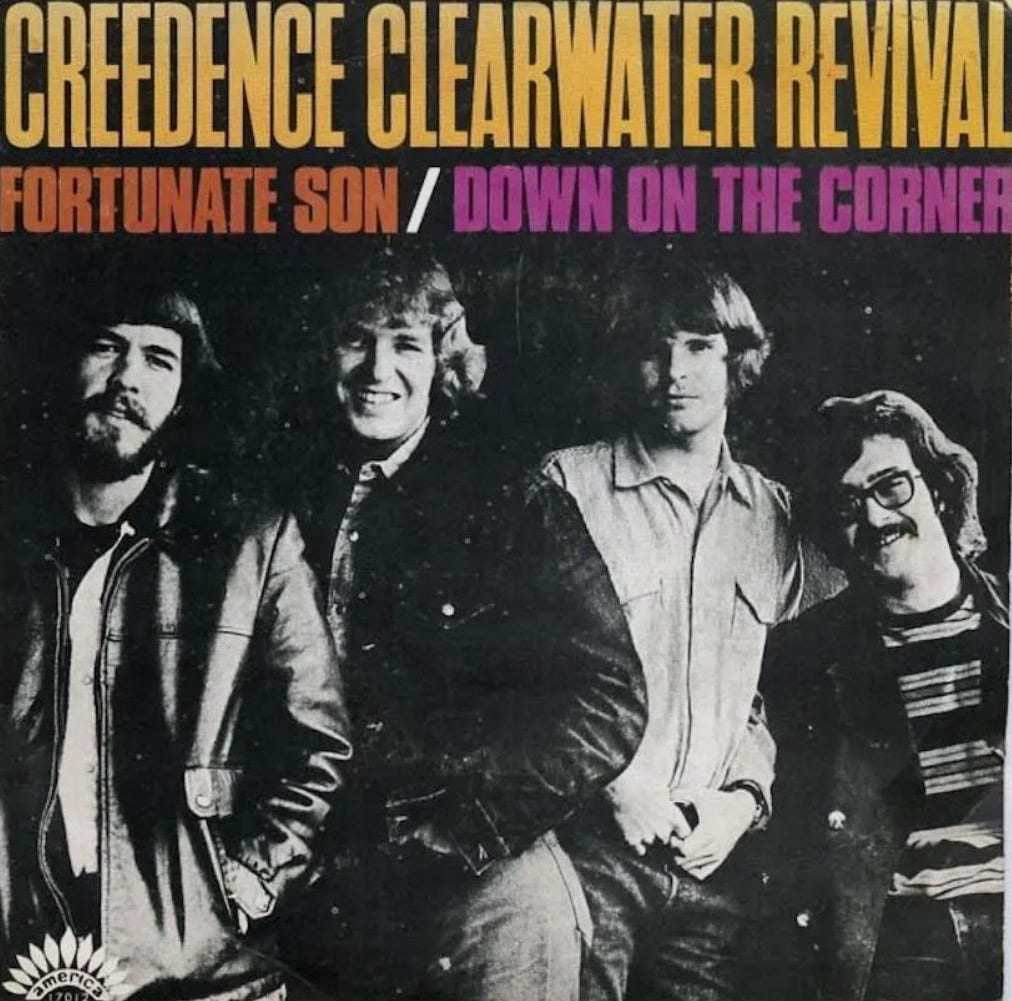
John Fogerty wrote it in 1969 in a burst of anger about how the Vietnam War landed on regular people while the connected found ways to dodge the draft. He has described it as a fast write, about 20 minutes, after a long “torrent” of thoughts about power, class, and unfairness.
The sheep recognize that feeling. Not the Vietnam details, obviously. The sheep were not eligible for deferments. The sheep were not invited to Georgetown dinners or “counseled” into a safe posting by a family friend in a nice suit. The sheep were just expected to keep the pasture running while important men held press conferences.
That is the spine of “Fortunate Son.” It is a song about how nations sell sacrifice, then quietly invoice it to the same people every time.
This weekend, with the U.S. and Israel striking Iran and the world bracing for whatever comes next, “Fortunate Son” stops being a Vietnam-era artifact and turns back into a live wire.
What the song is actually saying
The chorus is the blunt instrument.
“It ain’t me, it ain’t me, I ain’t no senator’s son.”
That line is not about one politician’s kid. It is about a whole category of people who live above consequence. The sheep call them “the ones who never touch the fence.” They can start a stampede, then watch it from the hill.
The song keeps returning to the same idea. Patriotism gets used like a costume. Some people wear it for photos, while others wear it into the ground.
“Some folks are born made to wave the flag.”
That is the opener, and it is already a warning. Fogerty is not praising pride. He is describing a type of person who performs loyalty loudly, then expects applause for it. The sheep have seen this energy in every era. The person who talks about “strength” like it is a personality trait, then disappears when anything hard needs doing.
Then the song twists the knife:
“It don’t look like a rag to me.”
It is an underrated line because it is so simple. He is saying, if you are using the flag as a prop for your anger, do not pretend it is love of country. It is just aggression with branding.
The sheep translate this as: if you only love the country when it is hurting the people you dislike, you do not love the country. You love the feeling of permission.
“Fortunate Son” is about class, not just war
A lot of people treat “Fortunate Son” like a generic anti-war song. It is anti-war, sure, but it is more specific than that. It is anti-hypocrisy.
Fogerty’s target is the system where the powerful can support war without paying the bill.
“It ain’t me, it ain’t me, I ain’t no millionaire’s son.”
That line expands the indictment. This is not only politics. It is wealth. It is the quiet, durable privilege that can survive any administration, any crisis, any scandal.
The sheep have a word for this. Insulation.
Insulation is when consequences bounce off you. It is when your “mistakes” become other people’s emergencies.
The song is basically asking…who gets insulated, and who gets drafted into the mess.
It hits hard right now
When the U.S. and Israel strike Iran, the first thing the sheep look for is the pattern that always shows up next.
The speeches will be full of brave nouns like freedom, security, deterrence, strength.
The costs will show up somewhere else. Higher prices, higher risk, higher tension, more surveillance, more crackdown energy, more “we need to be unified,” which is usually code for “stop criticizing us while we do this.”
The sheep have been watching the country train itself to accept escalating force abroad and escalating force at home, then call both of them “restoring order.” If you need a soundtrack for that, Fogerty already wrote it.
Because “Fortunate Son” is about who gets to decide there will be a war, and who gets punished for questioning it.
The propaganda problem inside the lyrics
One reason this song still works is that it names the machinery without needing a lecture.
“They send you down to war.”
That “they” matters. Fogerty is not saying “we decided.” He is not saying “the nation chose.” He is saying a smaller group sends a larger group.
That is propaganda’s favorite trick. Turn “they” into “we.”
If leadership can make people feel like war is a shared project, then the dissenters look like traitors instead of citizens with functioning eyes.
Fogerty undercuts that by refusing the shared identity. He repeats, in effect, “do not put your decision on my back.”
That is why the chorus keeps coming back. It is a refusal to be drafted into someone else’s storyline.
The most important line in the whole song
“It ain’t me, it ain’t me, I ain’t no fortunate one.”
This is the moral center. Not “I’m innocent.” Not “I’m above it.” Just: I’m not the one who gets protected.
The sheep understand this in their bones. The sheep do not get legacy admissions or golden parachutes. The sheep do not get invited to “private sector opportunities” after “public service.” The sheep get told to stay calm while the gate gets narrower.
So, when the country starts moving toward another season of conflict, the sheep ask the practical questions.
Who is going to fight and who is going to profit. Who is going to explain it on television and who is going to bury it.
And who will get told that “now is not the time” for criticism.
Today’s political landscape
In the U.S. right now, politics is increasingly sold as identity. The goal is to make loyalty feel like a personality and dissent feel like a betrayal of your own tribe.
That is how you get people to accept the unacceptable. You do not persuade them…you bind them.
“Fortunate Son” fights that binding with something old-fashioned. Clarity.
Fogerty is not asking permission to notice class privilege or offering a balanced panel discussion about it. He is naming it.
That matters in an age where propaganda depends on exhausting people into shrugging.
The sheep have a simple rule. When you feel yourself getting numb, that is usually the point.
The sheep’s warning about the next stage
If this escalates, you will hear a familiar chorus from powerful people: sacrifice, unity, patriotism, security.
The sheep advise you to listen for what is missing from those speeches.
You will not hear the names of the people who will carry the weight or the fine print about who will get exemptions, contracts, access, and protection.
You will hear plenty of moral theater, and then a quiet transfer of cost downward.
That is what “Fortunate Son” is yelling about from 1969 into 2026.
A sheep-sized takeaway
Fogerty wrote a song about a rigged system where the fortunate steer the country toward danger and the rest of the country is expected to clap, pay, and bleed.
The lyrics are simple because the scam is simple.
If you want to apply “Fortunate Son” to this moment, start with questions, not slogans.
Who benefits and who pays. Who gets the cameras and who gets the caskets.
The sheep are asking these questions because history is repetitive, and propaganda depends on amnesia.
“It ain’t me,” Fogerty sings, again and again, like a refusal.
The sheep hear it as a reminder. You are allowed to refuse the storyline and to demand accountability from the people who “send you down to war.” You are allowed to notice when the same class that cheers “strength” never seems to be the one standing in the line.
If the country is heading into another era where powerful people gamble with other people’s lives, the sheep suggest we stop treating that as normal.
Because the fortunate ones are counting on it.


